
Social media marketing for small businesses means using platforms like Facebook, Instagram, LinkedIn, and TikTok to build brand awareness, attract customers, and grow sales. Small businesses do not need to be on every platform. Choosing one to three platforms where your target audience is most active is enough to see real results.
Social media has changed how small businesses connect with customers. What once required a big advertising budget can now be done for free, from your phone, in minutes. For small business owners, that is a significant opportunity.
But here is the reality: most small businesses are not making the most of social media. They post inconsistently, spread themselves across too many platforms, or share content that does not connect with their audience. The result? Slow growth, low engagement, and a lot of wasted effort.
This guide covers everything you need to know about social media marketing for small businesses. From building a strategy to choosing the right platforms, creating content, running ads, and tracking results, you will find clear and practical advice here. Whether you are just getting started or looking to improve what you are already doing, this guide will help you move forward with confidence.
What Is Social Media Marketing for Small Businesses?
Social media marketing is the process of using social media platforms to promote your business, attract new customers, and build relationships with your audience. For small businesses, it is one of the most accessible and affordable marketing channels available.
It works by publishing content that your target audience finds useful, entertaining, or relevant. Over time, that content builds trust, increases brand awareness, and drives people to take action, whether that means visiting your website, making a purchase, or getting in touch.
Social media marketing falls into two main categories:
Organic social media marketing is free to publish. It includes regular posts, stories, videos, and community engagement. Organic content builds long term relationships and is ideal for community building and brand awareness.
Paid social media marketing requires an advertising budget. It uses targeted ads to reach new audiences faster. Paid campaigns are especially effective for lead generation, promotions, and driving traffic to your website.
Most small businesses benefit from a combination of both.
Why Is Social Media Marketing Important for Small Businesses?

Social media gives small businesses tools that were once only available to large companies with big marketing budgets. Here is why it matters:
Build brand awareness. Consistent social media activity puts your business in front of more people, many of whom may never have heard of you otherwise.
Reach potential customers. Platforms like Facebook and Instagram allow you to target people based on location, age, interests, and online behavior, so your content reaches the right audience.
Build customer relationships. Social media creates a direct line of communication between you and your customers. That kind of connection builds trust and loyalty over time.
Generate leads and drive sales. With clear calls to action and the right content strategy, social media can be a consistent source of new inquiries and sales.
Drive website traffic. Every post is an opportunity to direct followers to your website, product pages, or booking system.
How to Create a Social Media Marketing Strategy
A social media strategy does not need to be complicated. Start with these five steps.
What Business Goals Should You Set for Social Media?
Before you create a single post, get clear on what you want social media to do for your business. Common goals include:
- Building brand awareness
- Driving website traffic
- Generating leads
- Increasing sales
- Growing customer engagement
Your goals will shape everything else in your strategy, from the platforms you choose to the type of content you create.
How Do You Identify Your Target Audience on Social Media?
Think about who your ideal customer is. Consider their age, location, income level, interests, and online habits. What problems do they have that your business solves? Which platforms do they use most?
The more clearly you define your target audience, the easier it becomes to create content that resonates with them.
Which Social Media Platforms Are Best for Small Businesses?
Do not try to be everywhere at once. Choose one to three platforms based on where your audience spends their time and what type of content suits your business.
What Content Should Small Businesses Post on Social Media?
A strong content strategy includes a mix of content types:
- Educational content that teaches your audience something useful
- Promotional content that highlights your products or services
- Behind the scenes content that shows the human side of your business
- Customer stories and testimonials that build social proof
- Videos and images that capture attention quickly
- User generated content that encourages your community to share their experiences
How Do You Create a Social Media Content Calendar?
A content calendar helps you plan what to post, when to post it, and how often. Planning content in advance reduces stress, keeps you consistent, and ensures your content aligns with key dates, promotions, and business goals. Even a simple spreadsheet works well for this.
Best Social Media Platforms for Small Businesses
Is Facebook Still Worth It for Small Businesses?
Facebook remains one of the most powerful platforms for local businesses and community engagement. Facebook Groups allow you to build a loyal community around your brand, while business pages give you a professional presence online. Facebook advertising is also highly targeted, making it effective even with a modest budget.
How Can Small Businesses Use Instagram Effectively?
Instagram is built for visual content, making it ideal for product based businesses, restaurants, salons, and anyone whose work is highly visual. Reels and Stories generate strong organic reach, and the platform makes it easy to showcase products or services in a compelling, creative way.
Is LinkedIn Worth It for Small Businesses?
LinkedIn is the platform of choice for B2B marketing and professional services. If your business sells to other businesses or positions itself through thought leadership, LinkedIn is an excellent choice. It is less about volume and more about building professional credibility and genuine connections.
Should Small Businesses Use TikTok?
TikTok is one of the fastest growing platforms for reaching new audiences. Short form video performs exceptionally well here, and small businesses that embrace creative, authentic content can grow quickly without a paid budget. It rewards originality over production quality, which is great news for small business owners.
What Role Does YouTube Play in a Small Business Social Media Strategy?
YouTube is a long term investment. Educational videos, product demonstrations, and how to content perform well on YouTube because the platform functions as a search engine. Videos here can drive organic traffic for months or even years after publishing.
Social Media Content Ideas for Small Businesses
Running out of ideas? Here are reliable content formats that consistently perform well for small businesses:
- Product or service tips
- Customer testimonials and reviews
- Answers to frequently asked questions
- How to videos
- Behind the scenes posts
- Before and after content
- Team introductions
- Industry insights and tips
- Polls and questions
- User generated content
- Special offers and promotions
Mix and match these formats to keep your content fresh and varied.
How Often Should a Small Business Post on Social Media?
Consistency matters more than frequency. A realistic posting schedule you can maintain long term will outperform an aggressive schedule you abandon after two weeks.
As a general starting point:
- Facebook: 3 to 5 times per week
- Instagram: 4 to 7 times per week
- LinkedIn: 2 to 3 times per week
- TikTok: 3 to 5 times per week
Focus on quality over quantity. One genuinely useful post will always outperform five forgettable ones. Track what resonates with your audience and adjust your schedule accordingly.
How to Get More Customers From Social Media
Attracting customers through social media comes down to a few consistent habits:
- Create content that genuinely helps or entertains your audience
- Use relevant hashtags and location tags to extend your reach
- Respond to every comment and message promptly
- Share customer reviews and success stories regularly
- Use location based content if you serve a local area
- Add clear calls to action to your posts
- Direct followers to your website or contact page
- Run occasional promotions or giveaways to generate new interest
- Invest in targeted social media ads when you are ready to scale
Organic vs. Paid Social Media Marketing: What Works Best for Small Businesses?
Both approaches have a place in a small business social media strategy.
Organic social media marketing is free, builds long term trust, and is essential for community building. It takes time to gain traction but creates lasting relationships with your audience.
Paid social media marketing delivers faster reach and allows precise audience targeting. It is particularly effective for promotions, new product launches, and driving website traffic quickly.
The smartest approach combines both: use organic content to build your community and establish your brand, then use paid ads to amplify your best content and reach new potential customers.
Social Media Advertising for Small Businesses

When should you consider paid social media advertising? A few clear signals:
- You need faster results than organic growth can deliver
- You are promoting a time sensitive offer or event
- You want to reach a specific audience beyond your current followers
Start with a small, manageable budget. Even $5 to $10 per day on Facebook or Instagram can generate meaningful results when your targeting and creative are right. Test different ad formats, headlines, and images to find what resonates. Always track conversions so you know which ads are driving real business results.
Best Social Media Marketing Tools for Small Businesses
A few reliable tools can make managing social media much easier:
- Content scheduling: Buffer, Later, or Hootsuite
- Graphic design: Canva
- Social media management: Sprout Social or Meta Business Suite
- Analytics: Native platform analytics (Facebook Insights, Instagram Insights) or Google Analytics
- Video editing: CapCut or Adobe Premiere Rush
You do not need all of these. Start with one scheduling tool and one design tool, and add others as your needs grow.
How to Measure Social Media Marketing Success
Tracking the right metrics helps you understand what is working and where to improve. Focus on:
- Followers: Overall audience growth over time
- Reach and impressions: How many people see your content
- Engagement rate: Likes, comments, shares, and saves relative to your reach
- Website clicks: Traffic driven from social media to your site
- Leads and conversions: Inquiries, sign ups, or purchases attributed to social media
- Cost per lead and return on ad spend (ROAS): Key metrics for paid campaigns
Review these numbers monthly and use what you learn to refine your content and strategy.
Common Social Media Marketing Mistakes Small Businesses Should Avoid
Avoid these pitfalls to protect your time and your results:
- Trying to be active on every platform at once
- Posting only promotional content with no genuine value
- Inconsistent posting with long unexplained gaps
- Ignoring comments, messages, and mentions
- Buying followers (this destroys engagement and credibility)
- Failing to understand what your target audience actually wants
- Focusing only on follower count instead of engagement and conversions
- Not tracking results or using data to improve
- Expecting fast results from organic marketing alone
Simple Social Media Marketing Plan for Small Businesses
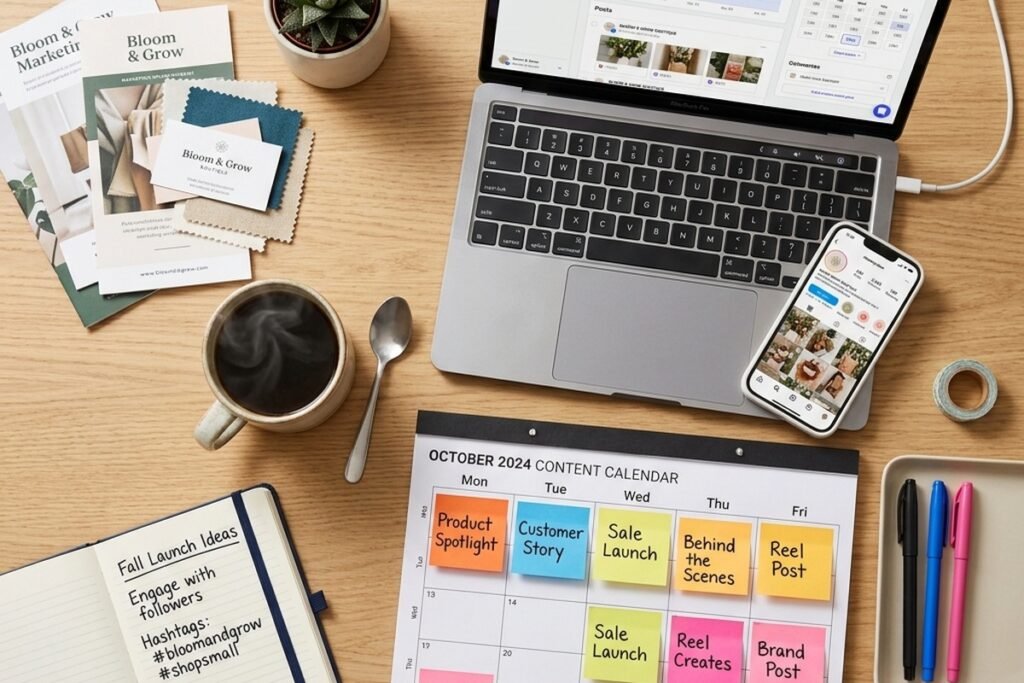
Here is a practical four week plan to get started:
Week 1: Research and Setup
Identify your target audience, choose one to three platforms, fully optimize your business profiles, and research what competitors are doing well.
Week 2: Content Planning
Define your content pillars, generate a list of content ideas, and build a one month content calendar.
Week 3: Publishing and Engagement
Start posting consistently, respond to every comment and message, and engage with relevant accounts in your niche.
Week 4: Analyze and Improve
Review your performance data, identify which content performed best, and use those insights to improve your next month of content.
Frequently Asked Questions
What is social media marketing for small businesses?
Social media marketing for small businesses is the process of using social media platforms to promote products or services, attract customers, and build brand awareness. It includes both organic content (free posts, stories, and videos) and paid advertising. Small businesses use social media marketing to grow their audience, generate leads, and drive sales without requiring a large marketing budget.
Which social media platform is best for small businesses?
The best platform depends on your business type and target audience. Facebook works well for local businesses and community building. Instagram suits product based businesses and visual brands. LinkedIn is ideal for B2B and professional services. TikTok works well for businesses willing to create short form video content. Most small businesses do best by starting with one or two platforms rather than trying to manage all of them.
How can small businesses get customers from social media?
Small businesses can attract customers from social media by posting consistently useful content, engaging with their audience, sharing customer reviews, using relevant hashtags, and adding clear calls to action. Running targeted paid ads and directing followers to a website or contact page also helps convert social media audiences into paying customers.
How often should a small business post on social media?
Most small businesses should aim to post three to five times per week on their primary platform. Consistency is more important than frequency. A realistic schedule you can maintain will produce better results than an aggressive one you abandon quickly.
How much does social media marketing cost for a small business?
Organic social media marketing is free, though it requires time and effort. Paid advertising budgets vary widely. Many small businesses start with $5 to $20 per day on platforms like Facebook and Instagram, adjusting based on results. Tools like Canva and Buffer are also available on free plans, keeping upfront costs low.
Can small businesses do social media marketing themselves?
Yes! Many small business owners manage their own social media successfully. Free tools like Canva for design, Buffer for scheduling, and native platform analytics make it straightforward to create, publish, and track content without hiring an agency. The key is starting simple, staying consistent, and learning as you go.
What type of content should a small business post?
Small businesses should post a mix of educational content, customer testimonials, behind the scenes content, product or service highlights, how to videos, and occasional promotional offers. A variety of content types keeps your audience engaged and prevents your feed from feeling like a constant sales pitch.
Is social media advertising worth it for small businesses?
Social media advertising is worth it for small businesses when used with clear goals and proper targeting. Even small budgets can produce measurable results when the audience is well defined and the creative is compelling. Start with a modest budget, test different approaches, and scale what works.
Start Where Your Customers Are
Social media marketing for small businesses does not require a big budget, a large team, or years of experience. It requires clarity, consistency, and a genuine willingness to show up for your audience.
Start by choosing one or two platforms where your customers are already spending time. Focus on creating content that is actually useful or interesting to them. Respond to comments. Track what works. Improve over time.
Growth on social media is not always fast, but it is steady when you approach it with the right strategy. The businesses that win on social media are not the ones with the most followers. They are the ones that show up consistently, build real relationships, and give their audience a reason to keep coming back.
Comments